The Selective Conscience
When Outrage Becomes a Political Preference

Did you only care about Iranian girls when you thought Israel or the U.S. killed them? Now that evidence is pointing to it being a misfired Iranian missile—that the regime killed its own citizens yet again—has your concern evaporated? It forces a difficult question: Do you have principles, or do you just have political preferences?
This isn’t an isolated observation; it’s a pattern of selective silence that I first felt personally during the January 6th Capitol riots. Several people close to me sent frantic text messages alerting me to the incursion at our nation’s Capitol. What struck me wasn’t the outreach itself, but the silence that had preceded it. These same individuals never once reached out during the numerous riots throughout the summer of 2020. There was no outreach when city blocks were seized, when police stations were burned, or when billions of dollars in damage and theft occurred across the nation. I found myself asking: Why now?
This dynamic is not restricted to domestic politics; it repeats on the global stage. I received direct messages the moment the United States began bombing targets in Iran. Yet, those same inboxes were silent when the regime being bombed murdered thousands of unarmed protesters in its own streets. Friends who decry “escalation” or “war” seemed entirely unfazed when tens of thousands of Iranian citizens were being slaughtered by their own government.
We see a similar pattern regarding Gaza and Israel. Countless voices decry the war in Gaza, citing the tragic loss of innocent lives. However, when ceasefires go into effect, the concern for those same civilians often evaporates. When Hamas—in an effort to re-establish power—was filmed killing “collaborators” among their own people, I never saw any of these same people criticizing Hamas for killing innocent civilians.
These inconsistencies suggest that the grievance isn’t actually about what these people claim it is. If the core principle were an opposition to political violence, then all political violence would be a cause for concern. If the principle were the protection of innocent civilians, then all innocent lives would be mourned, regardless of who pulled the trigger. The common thread tying this selective outrage together appears to be a redirected hostility towards the West or Western Civilization.
A curious clue emerged as I scrolled through footage of recent events.
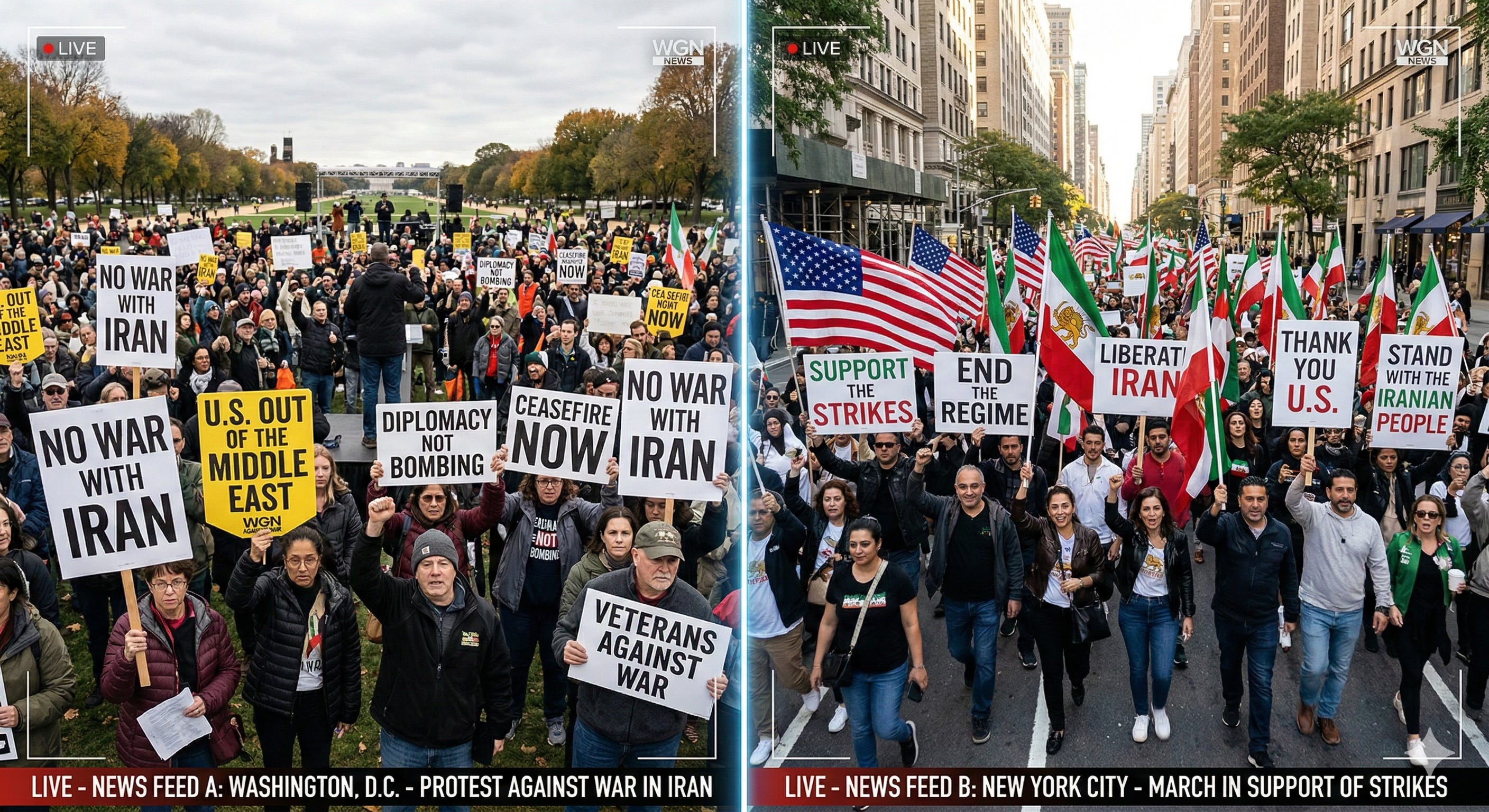
In the celebrations following the confirmed death of Iran’s Supreme Leader, the people in the streets were the Iranians themselves—both inside and outside the country. They were jubilant, dancing, and passing out flowers to police. They flew the flags of Iran, the United States, and even Israel. Conversely, the counter-protests against these actions consisted largely of a different demographic: older, Western individuals carrying professionally printed signs, but notably, no flags at all. Their movement was defined entirely by what they were against, rather than what they were for.
To be fair, I don’t believe these individuals consciously think they hate Western civilization. They are likely victims of modern algorithms that curate their reality. If asked, they would never claim a hatred of the West as their motivation. However, actions speak louder than words. If an individual only protests when the West or Israel act, but remains silent when atrocities are being committed against the very people they are claiming to want freedom for, their outrage is not based on a strictly held principle. It is a political preference.
Spot on sir