Categories are Maps, not Prisons
Without categories, we have no map of reality, and create a world of anxious, lost individuals.

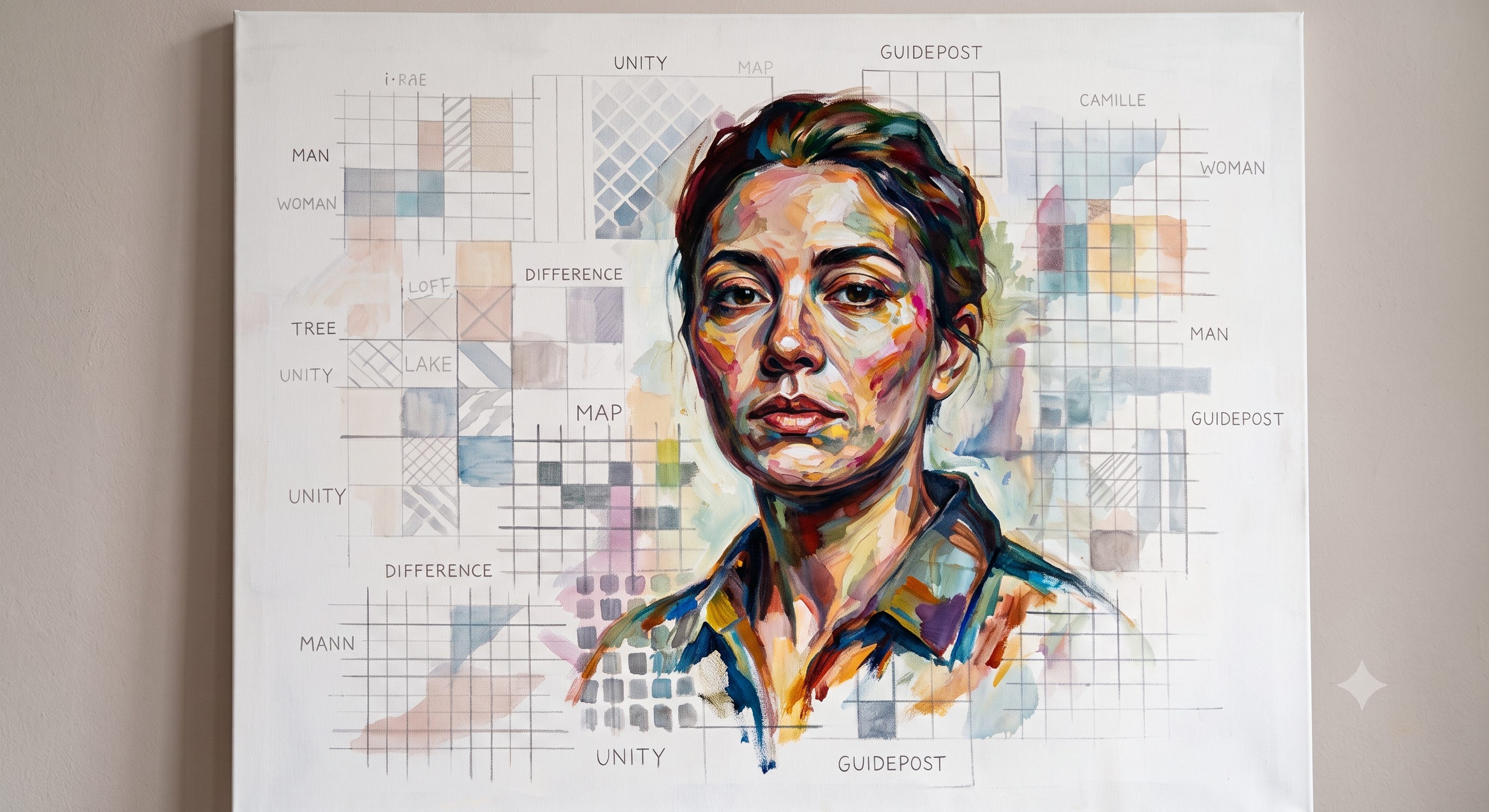
As I read through both volumes of Iain McGilchrist’s The Matter With Things, I wanted to share some thoughts from the book as I go through it.
There’s a paradox today. Many of us are obsessed with identity but also suspicious of, and angry towards, the structures that make identity possible.
Celebrating differences is usually well intentioned. We want to be able to accept that not everyone is going to be like us, and that’s ok. But to see difference we have to be able to describe those differences, and to describe differences we have to be able to use language that differentiates.
We need categories. Without categories, we cannot differentiate between anything nor have any language to describe what it is that’s different about anything or anyone.
Some may say that these categories are oppressive. It’s as if without these categories, each person will be able to finally express whatever it is their true nature is. I’m not sure how you can describe any individual without using language that defines what they are, and inherently defines what they are not, which creates categories.
But where does this impulse come from?
It’s a disposition common to the Left Hemisphere (LH) thinking of our brains. Our LH likes to isolate the individual from its context and thus eliminating the friction of difference and nuance. It creates an abstract idea of a person that’s easier to deal with than the messy reality that comes with humanity and eliminates the “in-betweeness” of those things which float between well defined categories.
In The Matter With Things, Dr. Iaian McGilchrist identifies the fatal flaw of that type of thinking:
“Connexion always produces difference along with union. An interaction is, at the same time, both an act of coming together, and the process through which each party becomes more itself.”
Categories are not prisons. Categories are the canvas upon which we paint the picture of our individuality. Without those categories - the language to describe - we eliminate the canvas completely leaving us with no means to articulate or recognize reality. Without these categories, we cannot even differentiate between two things and have an interaction that creates relationships and unity.
A person’s uniqueness cannot be measured in a vacuum. There has to be something against which to compare.
All individuality is characterized in comparison to something else. You are an individual as compared to all others, and those others must have some general quality that you can express that individuality against.
An oak tree is unique from all other trees because it has a specific leaf and growth pattern that is only comprehensible when compared to all other trees. If you eliminate the category of “oak tree,” or even “tree” then the individuality of an oak tree is incomprehensible.
The same thing goes for people:
To be a unique man, you first have to define what “man” is as a shared category. Then and only then can you measure yourself against a norm to understand what it is that makes you unique as compared to all other men.
To be a unique woman, there first has to be a baseline of what you mean by “woman” against which you can identify what makes you different as compared to all other women.
I understand that in a world where differences have been used to justify differential treatment that eliminating these differences may seem like a solution to injustice. But it doesn’t create a culture of hyper-individualized human beings with total freedom. It just creates an incomprehensible sea of unrecognizable and featureless uniformity.
Back to Reality
Individuality does not come from eliminating the categories we have in our language but from having the humility to understand that those categories are limited, estimates, and guideposts. Not hard and fast restrictive prisons.
We don’t need to eliminate the categories. Those categories are not prisons but a map. Without those reference points, it’d be like handing someone a blank piece of paper as a map and then wondering why they are lost, confused and anxious.
Sanity comes from embracing reality, embracing the categories of reality, and understanding how those shared categories bind us together, and are a prerequisite for individuality.